ELEVEN GENERATIONS · A LIVING ARCHIVE

Who Are
the Allahwalas?

An eleven-generation journey through Punjab, Delhi, Allahabad, Karachi and the changing world of enterprise.

Enter the family story ↓
Home/Family Legacy

CHAPTER I · THE NAME

Part family history.
Part history of South Asian enterprise.

The answer begins long before the modern businesses, schools and philanthropic initiatives associated with the name. It begins with merchants, migrations, changing cities and a family tradition carried across generations.

From Punjab to Delhi, from Allahabad to Karachi, the Allahwala story belongs to a wider world in which mobility, commercial trust and family networks helped small merchant communities survive political change.

CHAPTER II · ORIGINS UNDER RESEARCH

The Ahluwalia connection

Allahwala family records preserve an Ahluwalia connection through Ghulam Hamdani Mushafi Ahluwalia. This has led to a family tradition associating the earlier lineage with Ahlu village near Lahore and the wider Ahluwalia name.

Historical sources independently explain “Ahluwalia” as an association with Ahlu village. Jassa Singh Ahluwalia—born in 1718—is the best-known historical bearer of that name. A direct genealogical relationship between the Allahwala line and Jassa Singh Ahluwalia has not been independently established.

CHAPTER III · MERCHANT CITIES

A route with more than one version.

PunjabAhlu · Sargodha · ChiniotDelhiMerchant networksAllahabadSaudagar AllahabadiKarachiPost-Partition rebuilding

Published community accounts connect the Punjabi Saudagaran-e-Delhi with Punjab—especially Sargodha and Chiniot—and with commercial life in Delhi. Family titles in the supplied lineage also point repeatedly to Allahabad. These records do not yet prove one uninterrupted route, so this page preserves the places without pretending every movement is known.

CHAPTER IV · FAITH & IDENTITY

A name changes.
The precise trail remains open.

Some histories of the wider Shamsi or Punjabi Saudagaran community describe Muslim Khatri merchant origins and conversion under Sufi influence. One family interpretation is that the transition from the Ahluwalia association to the Allahwala name accompanied a broader change in faith and identity. The exact date and documentary trail remain subjects for further research.

No private belief is assigned here to a named ancestor without supporting evidence.

CHAPTER V · THE DIRECT LINE

Eleven generations
emerge from the record.

Names and order are supplied by the family. Broad eras are cautious research estimates—not birth or death dates.

Generation 1 of 11
  1. 01

    North India · Early eighteenth century

    Fakhr-ul-Hind Hussain Bakhsh

    Sauda Garela Walay

    Estimated era—not a confirmed birth or death date.

    The family-supplied lineage opens in a world of regional caravan trade, handwritten accounts and merchant networks operating across Mughal North India.

    Family-supplied lineage; location and era are research estimates.
  2. 02

    Allahabad · Mid-eighteenth century

    Darvesh Muhammad

    Saudagar Allahabadi

    Estimated era—not a confirmed birth or death date.

    Allahabad stood at the meeting of river routes and expanding commercial connections while political authority across northern India was changing.

    Name and title from family record; era inferred from generational order.
  3. 03

    Allahabad · Late eighteenth century

    Shaikh-ul-Hind Wali Muhammad

    Saudagar Allahabadi

    Estimated era—not a confirmed birth or death date.

    Merchants relied on reputation, correspondence and kinship to move goods and credit between trading cities during a period of political transition.

    Family-record estimate; exact dates remain under research.
  4. 04

    Allahabad / Ahluwalia association · Late eighteenth to early nineteenth century

    Ghulam Hamdani Mushafi

    Ahluwalia

    Estimated era—not a confirmed birth or death date.

    The surviving family record preserves both an Allahabad merchant setting and the important Ahluwalia designation that motivates further research into earlier origins.

    Name and relationship appear in family genealogy records; the Ahluwalia connection is not proof of descent from Jassa Singh Ahluwalia.
  5. 05

    North Indian merchant centres · Nineteenth century

    Ameer-ul-Hind Ghulam Muhammad Allahwala

    Allahwala

    Estimated era—not a confirmed birth or death date.

    This generation sits near the apparent transition in the supplied record from an Ahluwalia association to the Allahwala family title.

    Family-supplied lineage; reason and exact date of the name transition are unverified.
  6. 06

    Delhi / northern India · Mid-to-late nineteenth century

    Haji Mahboob Bakhsh Allahwala

    Merchant generation

    Estimated era—not a confirmed birth or death date.

    Railways, post and new legal institutions were transforming how established merchant communities traded and maintained far-reaching relationships.

    Family-supplied lineage; broad era inferred from sequence.
  7. 07

    Delhi / northern India · Late nineteenth to early twentieth century

    Haji Sirajuddin Allahwala

    Merchant generation

    Estimated era—not a confirmed birth or death date.

    Commercial families navigated colonial markets while community institutions increasingly supported education, welfare and mutual assistance.

    Family-supplied lineage; exact dates and locations remain under research.
  8. 08

    Delhi to Karachi context · Early-to-mid twentieth century

    Muhammad Ismail Ahmed Allahwala

    Pre-Partition generation

    Estimated era—not a confirmed birth or death date.

    This was the generation that encountered mass politics, new transport networks and the upheaval surrounding the end of British rule.

    Family-supplied lineage; migration details require documentary confirmation.
  9. 09

    Karachi, Pakistan · Partition and post-Partition Pakistan

    Ikhlas Allahwala

    Partition-era generation

    Estimated era—not a confirmed birth or death date.

    After 1947, many Punjabi Saudagaran families rebuilt commercial and community life in Karachi, a port city central to the new country’s economy.

    Family-supplied lineage placed within documented community migration; individual route under research.
  10. 10

    Karachi, Pakistan · Post-Partition Pakistan

    Irfan Allahwala

    Businessman and father of Fazal

    Estimated era—not a confirmed birth or death date.

    Enterprise expanded through a rapidly growing city where family reputation, adaptability and trading relationships remained essential commercial assets.

    Relationship and business identity supplied by Fazal Allahwala.
  11. 11

    Pakistan and international markets · Contemporary Pakistan

    Fazal Allahwala

    Agriculture, biomass and emerging-market enterprise

    Estimated era—not a confirmed birth or death date.

    The historic line enters agriculture, commodity trade, biomass pellets, clean cooking, industrial heat, farmer engagement and a circular rural economy.

    Supported by Fazal’s operating record, LinkedIn archive, company work and published Biomass Magazine article.

CHAPTER VI · THE ALLAHWALAS TODAY

A small community.
A wide field of service.

Though relatively small, the wider community has produced entrepreneurs, philanthropists, educators and civic participants whose work reaches beyond Pakistan. Shared surnames do not by themselves prove a direct relationship.

Entrepreneur and educator

Rehan Allahwala

Known publicly for work in technology, entrepreneurship education and digital skills. His official biography describes an entrepreneurial upbringing and a career beginning in childhood.

Verified context ↗
Businessman

Irfan Allahwala

Fazal identifies Irfan Allahwala as his father and a direct influence within his own branch of the family. This relationship is presented as family-supplied information.

Verified context ↗
Farmer, biomass operator and advisor

Fazal Allahwala

Director of Eco Harvest and Rocket Choolha; a Biomass Magazine contributor working across agriculture, residues, pellets, renewable industrial heat and rural employment.

Verified context ↗

Iqbal Allahwala and Saeed Allahwala were named as research leads, but were not included as biographical profiles because the available public records did not yet distinguish their identities and achievements with enough confidence.
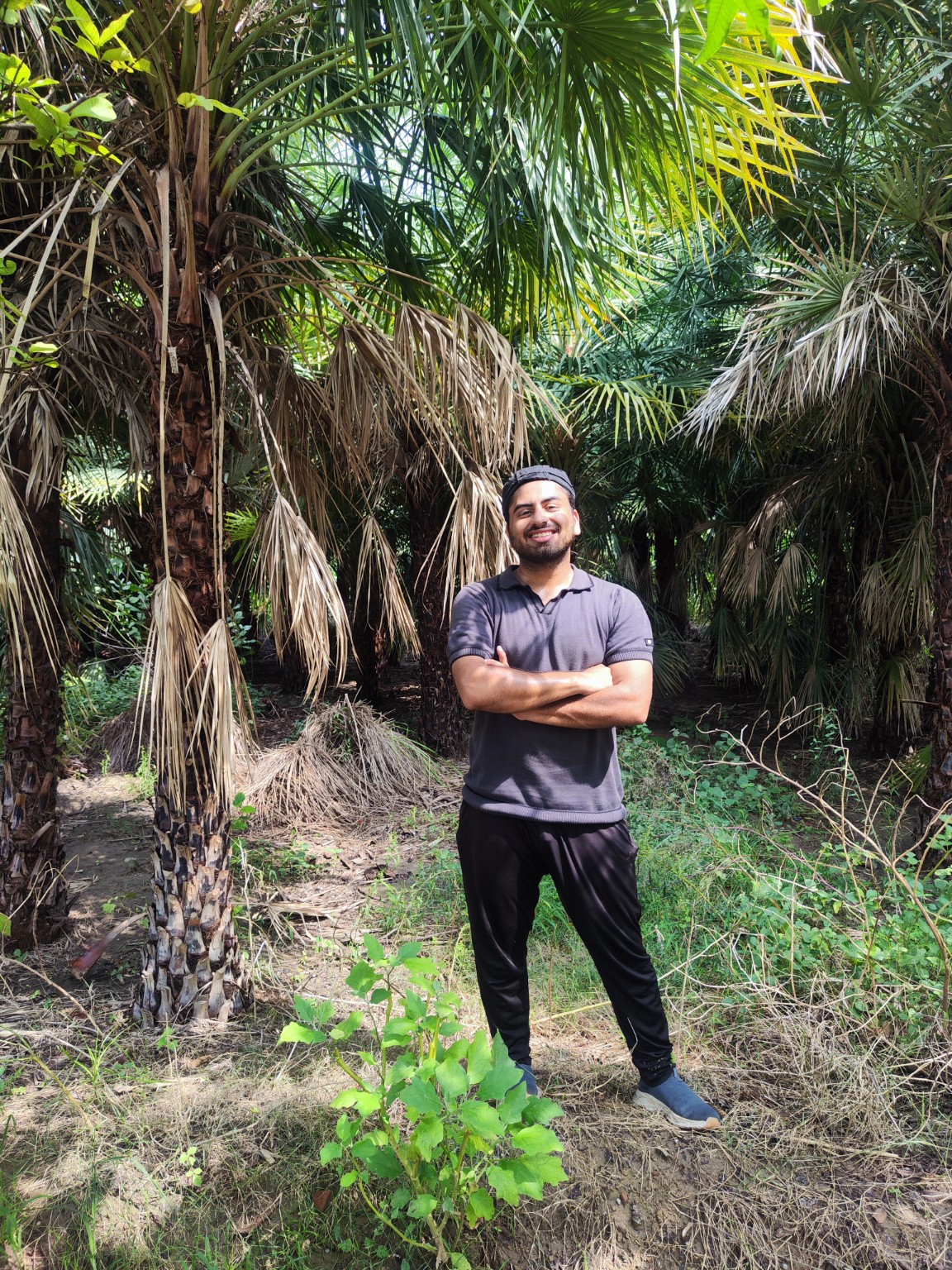
Fazal Allahwala standing among date palms during agricultural field work
GENERATION 11 · PAKISTAN

FINAL CHAPTER · A LIVING LINE

An old tradition enters a new industry.

Fazal Allahwala carries the family’s entrepreneurial tradition into agriculture, biomass and renewable energy. Through Eco Harvest and Rocket Choolha, his work connects farms, agricultural trading and exports, residues, pellet production, clean cooking, industrial heat and rural employment.

His advisory work explores practical farmer engagement, agricultural data, Scope 3 supplier programmes and emerging-market implementation. It does not issue certifications, assurances or carbon credits.

The tools have changed—from trade routes and merchant ledgers to agricultural supply chains and biomass plants—but the instinct remains familiar: identify a need, build trust and create an enterprise around it.
FARMERCROPRESIDUEBIOMASS FUELINDUSTRIAL HEATIMPACT

Eleven generations later,
the journey continues.

If you hold family records, photographs, documents or corrections connected with this history, we welcome your contribution.

Explore Fazal’s workReturn to the main page

Sources and research notes

This page combines documented records, family history and continuing historical research. Estimated eras and oral traditions are identified as such and may be revised when additional evidence becomes available.

  1. Khandan.us family record for Ghulam Hamdani Mushafi — genealogy lead; treated as family record.
  2. Jamiyat Punjabi Saudagaran-e-Delhi: About Us — community history and post-Partition social work.
  3. FamilySearch surname reference: Ahluwalia — place-name meaning and Ahlu association.
  4. Sikh Research Institute: Jassa Singh Ahluwalia — historical context, dates and Ahlu birthplace.
  5. Anjuman-i-Wakil Qaum Punjabian history — institutional history dating to 1906.
  6. Rehan Allahwala: official biography.
  7. Biomass Magazine: Fazal Allahwala’s published article.
  8. Fazal Allahwala’s supplied direct lineage and LinkedIn data export — family and professional primary materials.