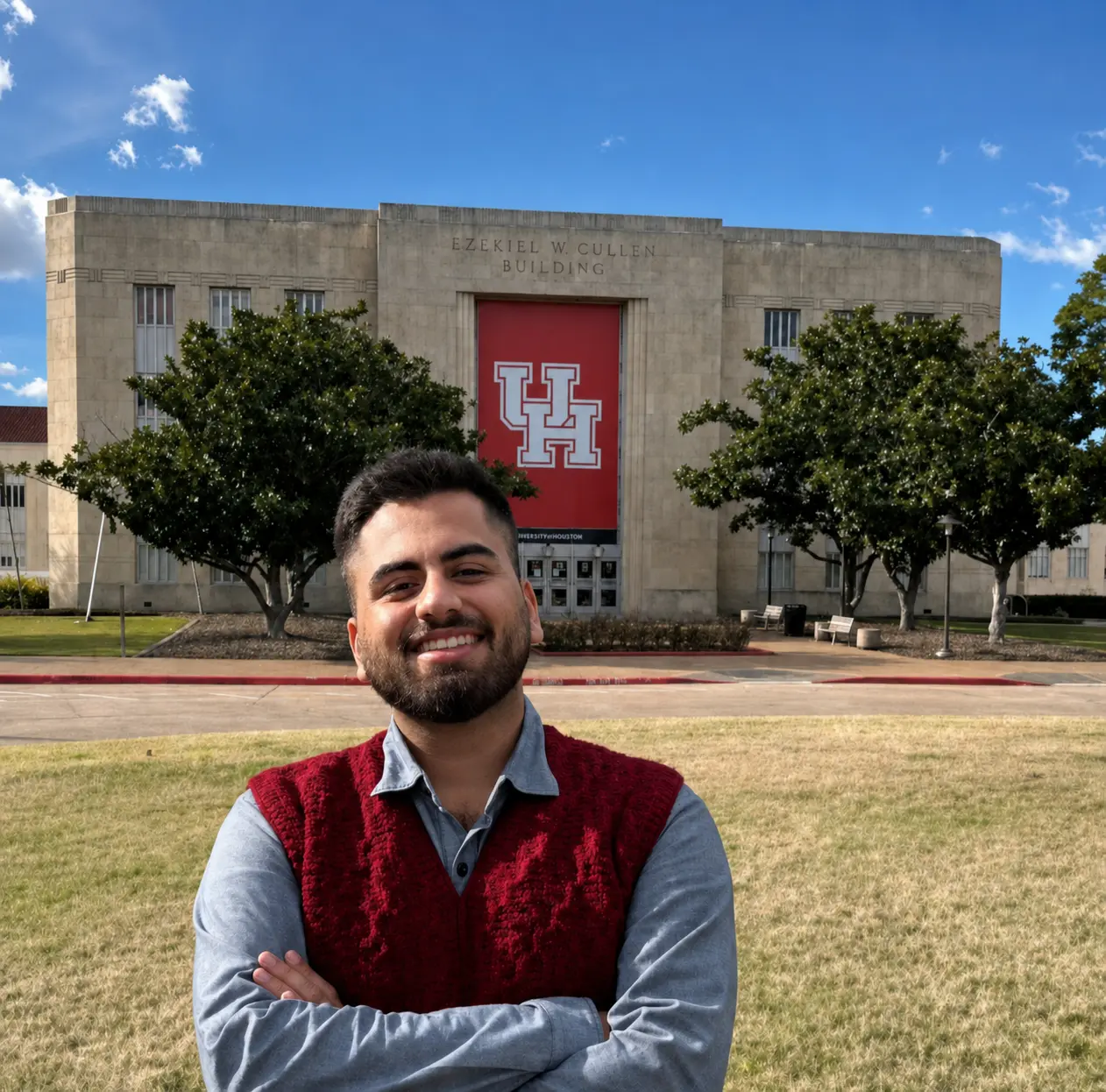
For Fazal Allahwala, entrepreneurship is not simply a profession. It is a family language: the habit of observing a need, accepting commercial risk, building relationships and creating something useful. Fazal describes himself as the generation eleven in a business lineage connected with the Punjabi Saudagran-e-Delhi community.
IMMEDIATE FAMILY & INFLUENCE
Irfan Allahwala
Businessman and Fazal’s direct family influence
Rehan Allahwala
Entrepreneur and educator
Fazal Allahwala
Agriculture, biomass, energy and rural enterprise
A family language of enterprise
The supplied eleven-generation sequence is a family-history account rather than an independently audited genealogy. Fazal presents it in that spirit: not as a title of superiority, but as a responsibility to make an inherited culture of enterprise useful to Pakistan’s future.
The family tree closest to Fazal
Fazal is the son of businessman Irfan Allahwala. He credits his father’s commercial experience and example as part of the environment in which he learned that trust, persistence and reputation matter as much as a transaction.
Fazal is also the nephew of entrepreneur and educator Rehan Allahwala, whose public work spans technology, telecommunications, education and entrepreneurship. The relationship places Fazal inside a living family conversation about how business knowledge can be shared, adapted and used to widen opportunity.
Community roots and rebuilding
The family identifies with the Punjabi Saudagran-e-Delhi business community. JPSD’s published community history records a trading tradition rooted in Delhi and the rebuilding of lives and commercial networks in Karachi after Partition.
That history matters because it connects entrepreneurship with resilience. Families did not inherit perfect conditions; they rebuilt through trade, relationships, education and mutual support. JPSD’s community work in education, health, employment and self-reliance reflects the wider belief that commercial success carries social duties.
Fazal’s chapter: agriculture to energy
Fazal’s own chapter is shaped by Pakistan’s present-day challenges. As Director of Eco Harvest, he works across agriculture, difficult-land development, forestry, livestock and commodity supply. As Director of Rocket Choolha, he works with agricultural residues, biomass pellets, clean-cooking systems and renewable industrial heat.
The chain connects farmer, crop, agricultural residue, biomass fuel, industrial heat and measurable impact. His long-term mission is a diesel-free, circular rural economy in which farms produce food, suitable residues create energy, and more value and employment remain in rural communities.
What generation eleven should mean
For Fazal, being generation eleven should not mean repeating the eleventh. Each generation inherits different problems. His generation faces climate risk, energy insecurity, rural unemployment, water stress and the need for credible environmental data.
The most meaningful way to honour a business heritage is therefore to build systems that work: farms that remain productive, residue markets that protect soil health, biomass fuel that meets specifications, industrial trials that produce honest data and enterprises that create dignified livelihoods.
A record still being written
This is not presented as a complete genealogical record. It is Fazal’s account of his immediate family relationships, community heritage and the entrepreneurial values he aims to carry forward. Additional names, dates and documentary records can be added as the family history is researched and verified.
The story’s central claim is practical rather than ceremonial: inheritance creates an obligation. Fazal’s task is to make an old culture of enterprise relevant to a cleaner, more productive and more inclusive Pakistan—and to leave the next generation a stronger platform from which to begin.
Related source: JPSD community history ↗
COMMON QUESTIONS
Frequently asked
Is Fazal Allahwala generation eleven in the family lineage?
Fazal describes himself as part of a eleven-generation direct lineage. The website labels this transparently as a family-history account rather than an independently verified genealogical conclusion.
Who is Fazal Allahwala’s father?
Fazal states that he is the son of businessman Irfan Allahwala.
How is Fazal related to Rehan Allahwala?
Fazal states that entrepreneur and educator Rehan Allahwala is his uncle.
What is the family business tradition connected with?
The family identifies with the Punjabi Saudagran-e-Delhi community, whose published history describes longstanding trading traditions and post-Partition rebuilding in Karachi.