
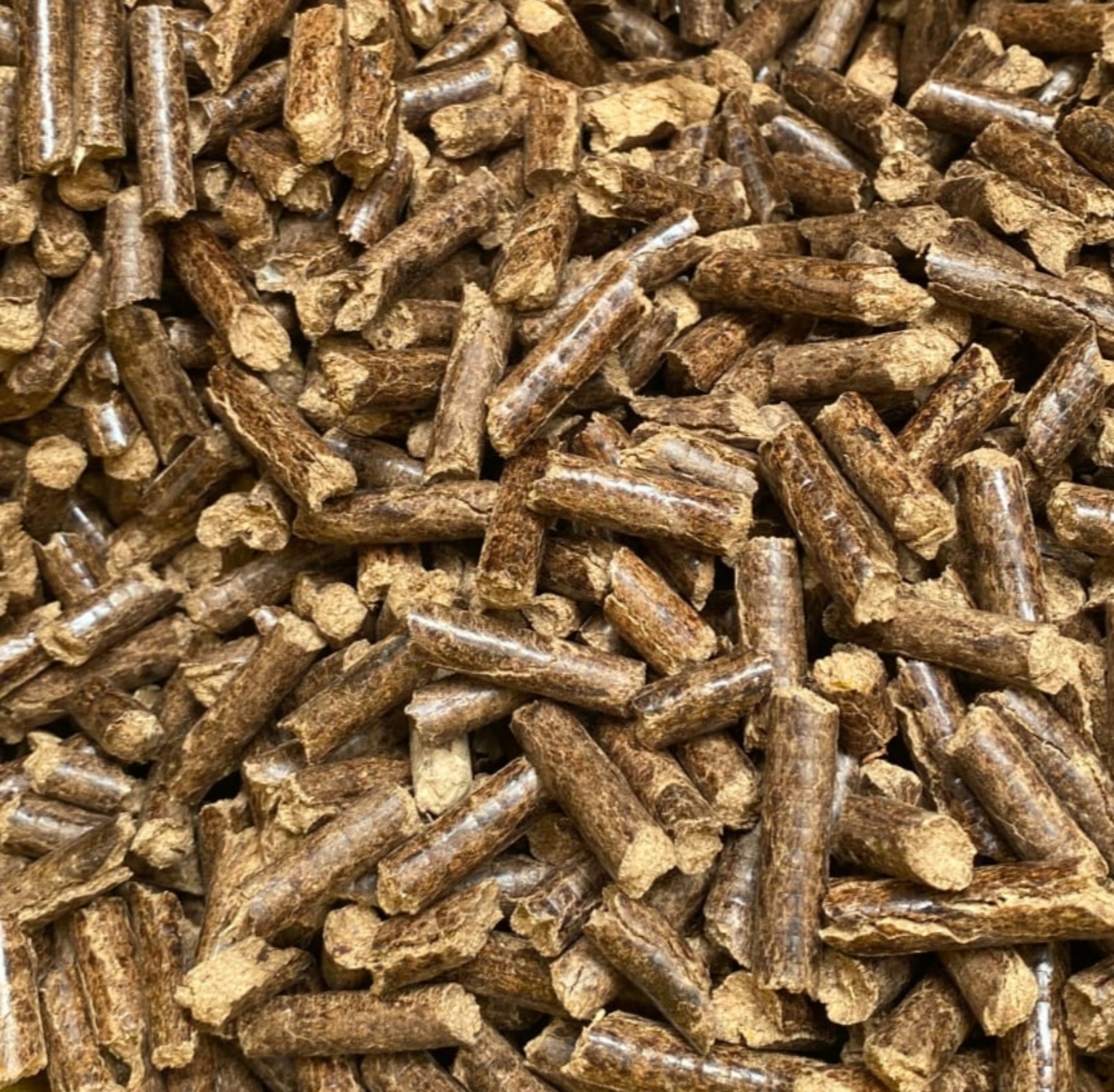
Pakistan produces large volumes of agricultural residue while industrial users continue to depend on costly fossil fuels. Pelleting can connect those two realities: suitable residues are dried, reduced in size and compressed into a transportable fuel with more consistent handling characteristics than loose biomass.
Why pellets matter in Pakistan
I approach the subject as a farmer and biomass entrepreneur. The opportunity is real, but pellets are not automatically clean, economical or suitable for every boiler. A successful conversion begins with the process heat requirement, the existing combustion system and a representative fuel analysis—not with a sales slogan.
Wood pellets and agro-residue pellets are not identical
Wood pellets are commonly made from sawdust and other clean woody residues. Agro-residue pellets may use rice husk, bagasse, straw, corn residues, cotton stalk or other locally available material. Each feedstock behaves differently. Ash content, slagging risk, chlorine, alkali metals, moisture and bulk density can all affect storage and combustion.
A buyer should ask what the pellet is made from, whether the feedstock is traceable, and whether the laboratory sample represents the shipment being offered. The cheapest price per tonne can become the most expensive heat if fuel causes downtime, deposits or poor efficiency.
The specification buyers should request
At minimum, request net or gross calorific value with the test basis stated, moisture, ash, pellet diameter, fines, bulk density, mechanical durability and a recent independent laboratory report. For sensitive boilers, elemental analysis and ash-fusion behaviour may also matter.
Commercial discussions should also define quantity, packing, loading location, delivery basis, inspection method and how off-specification material will be handled. A trial should use enough fuel to reveal feeding, ash and operational behaviour under real load.
Responsible sourcing is part of fuel quality
Pakistan’s strongest long-term opportunity is to create value from residues and waste streams, not to shift pressure onto forests. Buyers should prefer documented agricultural residues, sawmill by-products and other legally sourced material. Traceability, supplier audits and clear chain-of-custody records reduce commercial and environmental risk.
This is why I advocate standards and certification appropriate to Pakistan. The industry will grow faster when buyers can compare products on verified quality and origin rather than trusting appearance alone.
A practical procurement sequence
Define the heat duty and equipment constraints. Shortlist fuels by feedstock and location. Test representative samples. Run a controlled combustion trial. Calculate delivered energy cost rather than only price per tonne. Then agree recurring quality checks before scaling volume.
Rocket Choolha welcomes serious conversations with industrial users and traders. Share the destination, monthly volume, intended equipment, required specification and packing format so the team can evaluate feasibility responsibly.
COMMON QUESTIONS
Frequently asked
Are wood pellets available in Pakistan?
Yes, but availability and specification vary by producer and feedstock. Industrial buyers should verify laboratory results, traceability and recurring supply before committing.
Can biomass pellets replace coal or furnace oil?
In some thermal applications they can replace part or all of another fuel, but compatibility depends on the boiler, combustion system, emissions controls and pellet properties. An engineering review and trial are essential.
Does Rocket Choolha export pellets?
Export enquiries are evaluated from Pakistan and the UAE. Buyers should provide destination, volume, specification, packing and delivery terms.